
USA Syndopa 275 mg Sun Pharmaceuticals Industries
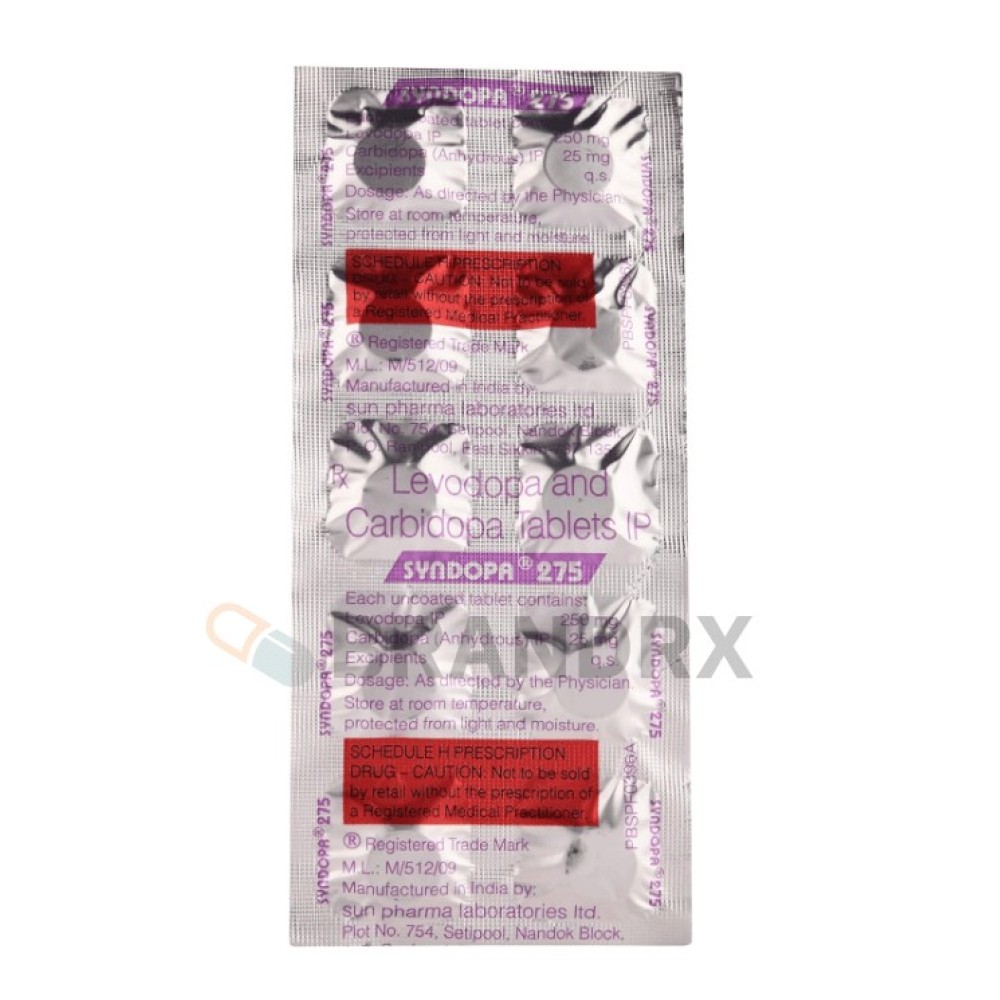
Syndopa 275 mg Sun Pharmaceuticals Industries: Understanding Its Purpose
Syndopa 275 mg, produced by Sun Pharmaceuticals Industries, is a pharmaceutical preparation combining two active ingredients: levodopa and carbidopa. This medication is primarily used in the management of Parkinson's disease and Parkinsonism. Levodopa acts as a precursor to dopamine, a neurotransmitter that is deficient in the brains of individuals with Parkinson's disease, while carbidopa is included to inhibit the conversion of levodopa into dopamine outside the brain, ensuring more levodopa reaches the central nervous system. This combination enhances the effectiveness of the treatment and minimizes side effects, such as nausea that can arise from systemic dopamine levels. Consequently, Syndopa 275 mg stands as a vital component in the comprehensive management of Parkinson's disease, offering patients relief from motor symptoms, improving quality of life, and enabling better daily functioning.
Integrating Syndopa 275 mg Sun Pharmaceuticals Industries into Broader Treatment Strategies
The use of Syndopa 275 mg is not an isolated effort but part of a multi-faceted approach to treating Parkinson's disease. In practice, healthcare providers typically combine Syndopa with other therapeutic modalities to enhance treatment outcomes. This might include adjunctive therapies such as physical rehabilitation, occupational therapy, and lifestyle modifications that promote overall well-being and assist with movement disorders. Furthermore, it is crucial to understand that Parkinson's disease is progressive, and treatment needs may change over time. Syndopa 275 mg fits into the broader spectrum of therapies often utilized in a staggered approach, where dosage adjustments are made based on patient response and tolerance. This adaptability is pivotal for managing both the motor and non-motor symptoms associated with Parkinson's disease. In some cases, patients might also be prescribed additional medications, such as MAO-B inhibitors or dopamine agonists, to further enhance symptomatic relief or to address specific patient needs. Moreover, collaboration between neurologists and primary care providers ensures holistic management, enabling a comprehensive review of medication interactions and side effects, thus optimizing the therapeutic regimen.
Anticipated Advantages of Using Syndopa 275 mg
Users of Syndopa 275 mg typically anticipate several key advantages from this preparation. Understanding these benefits can empower patients and caregivers in their treatment decisions. The following are the notable advantages associated with Syndopa 275 mg:
Effective Dopamine Replacement: The formulation provides significant relief from the motor symptoms associated with dopamine deficiency in Parkinson's disease.
Reduced Side Effects: By utilizing carbidopa to prevent premature conversion of levodopa, users usually experience fewer gastrointestinal side effects.
Improved Quality of Life: Patients often report better overall functioning and reduction in symptoms, contributing to enhanced daily living activities.
Flexibility in Dosage: Syndopa 275 mg offers flexibility in dosing, allowing healthcare providers to tailor treatment regimens to meet individual patient needs.
Compatibility with Other Treatments: Its use can effectively complement other medications, broadening treatment options and strategies for managing Parkinson's comprehensively.
Risks, Precautions, and Contraindications of Syndopa 275 mg
While the therapeutic benefits of Syndopa 275 mg are significant, it is important to acknowledge the potential risks and precautions associated with its use. Certain side effects may arise, such as dyskinesias (involuntary movements), orthostatic hypotension (a drop in blood pressure upon standing), and fluctuations in motor function known as "on-off" phenomena. Therefore, regular monitoring by healthcare providers is critical.
Contraindications include a known allergy to either levodopa or carbidopa, and patients with a history of certain psychiatric disorders or closed-angle glaucoma should use this medication with caution. Drug interactions can also occur, particularly with other medications that affect dopamine levels or those that can interfere with levodopa absorption, such as certain antihypertensives and antipsychotic medications.
Patients are advised to discuss their complete medical history and current medications with their healthcare provider to ensure safe and effective use of Syndopa 275 mg. Awareness of possible side effects and communication with healthcare providers about any abnormal symptoms is imperative in the ongoing management of treatment.
Approaching Syndopa 275 mg Sun Pharmaceuticals Industries Responsibly
In conclusion, a responsible approach to the understanding and use of Syndopa 275 mg is paramount to achieving optimal treatment outcomes for individuals living with Parkinson's disease. Patients and caregivers should engage actively in discussions with healthcare providers regarding treatment goals, monitoring regimens, and any concerns they may have regarding side effects or efficacy.
Education on the importance of adhering to prescribed dosages and the timing of medication can significantly enhance patient outcomes. Additionally, being aware of lifestyle adaptations that may support treatment, such as regular physical activity, balanced nutrition, and social support systems, can contribute positively to overall health and well-being. Ultimately, the combination of informed patient participation and proactive healthcare support is vital in navigating the complexities of managing Parkinson's disease with Syndopa 275 mg from Sun Pharmaceuticals Industries.
| Features | |
| Also known as | L-DOPA |
| Blood pressure | Can cause orthostatic hypotension |
| Chemical name | L-3,4-dihydroxyphenylalanine |
| Dosage (medical) | Typically, initial doses are 100 mg daily, increasing gradually as needed and tolerated. Maintenance doses usually range from 300 mg to 800 mg per day, divided into multiple doses |
| Dosage (sports) | Not applicable as it is not used for enhancing sports performance |
| Effects | Improves motor control and reduces symptoms of Parkinson's disease |
| Formula | C9H11NO4 |
| Half-life | 1 to 3 hours |
| Hepatotoxicity | Low to none |
| Lab Test | Monitoring of liver and kidney functions may be recommended |
| Main action | Precursor to dopamine, used to increase dopamine concentrations in the treatment of Parkinson's disease and dopamine-responsive dystonia |
| Side effects | Nausea, vomiting, hypotension, dyskinesias, hallucinations, dizziness, and confusion |
| Storage conditions | Store at room temperature, away from moisture and heat |
| Strength | 275 mg |
| Substance class | Amino acid derivative |
| Trade name | Sinemet, Levodopa, Dopar |
| Use in sports | Not typically used in sports, considered doping if used to enhance performance |
| Water Retention | Minimal to none |
| Manufacturer | Sun Pharmaceuticals Industries |